Most homeowners request 2 or 3 exterior painting estimates expecting the numbers to be close. Then they come back $1,500 to $2,500 apart, and suddenly the decision feels a lot more complicated than it should.
Here’s the thing: that gap almost always has a clear explanation. It’s not about which painter likes you more or which one is being greedy. It comes down to what each estimate actually includes, what condition your home is in, and which materials are being used to get the project done.
Understanding what drives those numbers before you start making calls puts you in a much stronger position. You’ll know what to ask, what to compare, and what warning signs to watch for when something looks too good to be true.
Quick Takeaways:
What Affects Exterior Painting Cost: the Factors That Matter Most
Painters look at more than square footage when they price an exterior project. Here are the factors that move the number the most and why each one matters for homes in mid-Missouri.
Surface Prep and Your Home’s Current Condition
This is the factor that surprises homeowners more than any other. A house that looks fine from the street can have peeling paint on the north side, mildew collecting under the eaves, soft wood around window frames, and caulk that gave up 2 seasons ago.
All of that has to be addressed before any new paint goes on. On homes that haven’t been touched in several years, prep work can represent 30-40% of the total project cost. That’s not filler in the estimate. That’s the work that decides whether your new paint lasts 8 years or starts peeling in 24 months.
Surface cleaning is a big part of that prep. Residential pressure washing clears away mold, chalk, dirt, and old loose paint so the new coat actually bonds to the surface the way it’s supposed to.
The Type of Siding on Your Home
Not all siding holds paint the same way, and painters account for those differences when putting together a quote.
Here’s how common siding types affect the scope and cost of a project:
- Wood siding is porous and typically absorbs more primer and product per coat than other materials
- Vinyl siding needs adhesion-specific primers and formulations built for low-porosity surfaces
- Brick and stucco take more time because the texture pulls in more material with every coat
- Fiber cement like HardiePlank bonds well but still requires the right prep steps to hold long term
Ask your painters upfront which specific products they plan to use for your siding type. That detail tells you a lot about how thoroughly they’ve thought through your specific project.
Paint Quality and What It Actually Does to the Price
The difference between a budget gallon of exterior paint and a premium one might be $20-30 per gallon at the store. Spread across a full home, that adds up. But so does repainting 3 years ahead of schedule.
Consumer Reports’ exterior paint testing consistently shows that top-rated exterior paints outperform lower-grade options in both adhesion and color retention after repeated exposure to heat and moisture. Mid-Missouri summers are hard on paint. High UV exposure combined with humidity puts real stress on the finish, and lower-grade products show that stress faster.
Sherwin-Williams Duration Exterior is formulated with a self-priming base and moisture-resistant binders built for humid climates. It’s not a premium product because of the label. It’s a premium product because the chemistry performs better under the conditions your home actually faces. Spending more on the right paint is often the more cost-effective call over a 10-year window.
How Many Coats Are Actually in the Estimate
Coat count is one of the most overlooked line items in any exterior painting quote. 1 coat and 2 coats look similar on paper but produce very different results, and painters don’t always make the difference obvious unless you ask.
Going from a dark color to a light one, or making any large color shift, almost always requires 2-3 coats for consistent, long-lasting coverage. Our post on how many coats of paint walls need breaks down exactly when 1 coat does the job and when it doesn’t. Knowing that before you compare estimates helps you read the numbers accurately.
Get the coat count in writing before any project starts.
Total Paintable Area, Not Just Square Footage
A home’s floor plan square footage is a starting point for estimating, not the full picture. Painters price based on the total surface area that actually needs to be painted. That includes trim, soffits, fascia boards, doors, window frames, shutters, and any decorative detail that requires hand-cutting.
Two homes with the same footprint can produce estimates that are $1,000 apart because one has clean modern lines and the other has intricate trim throughout. More detail means more labor hours, and labor hours are the biggest cost driver in any exterior project.
Site Access and Working Height
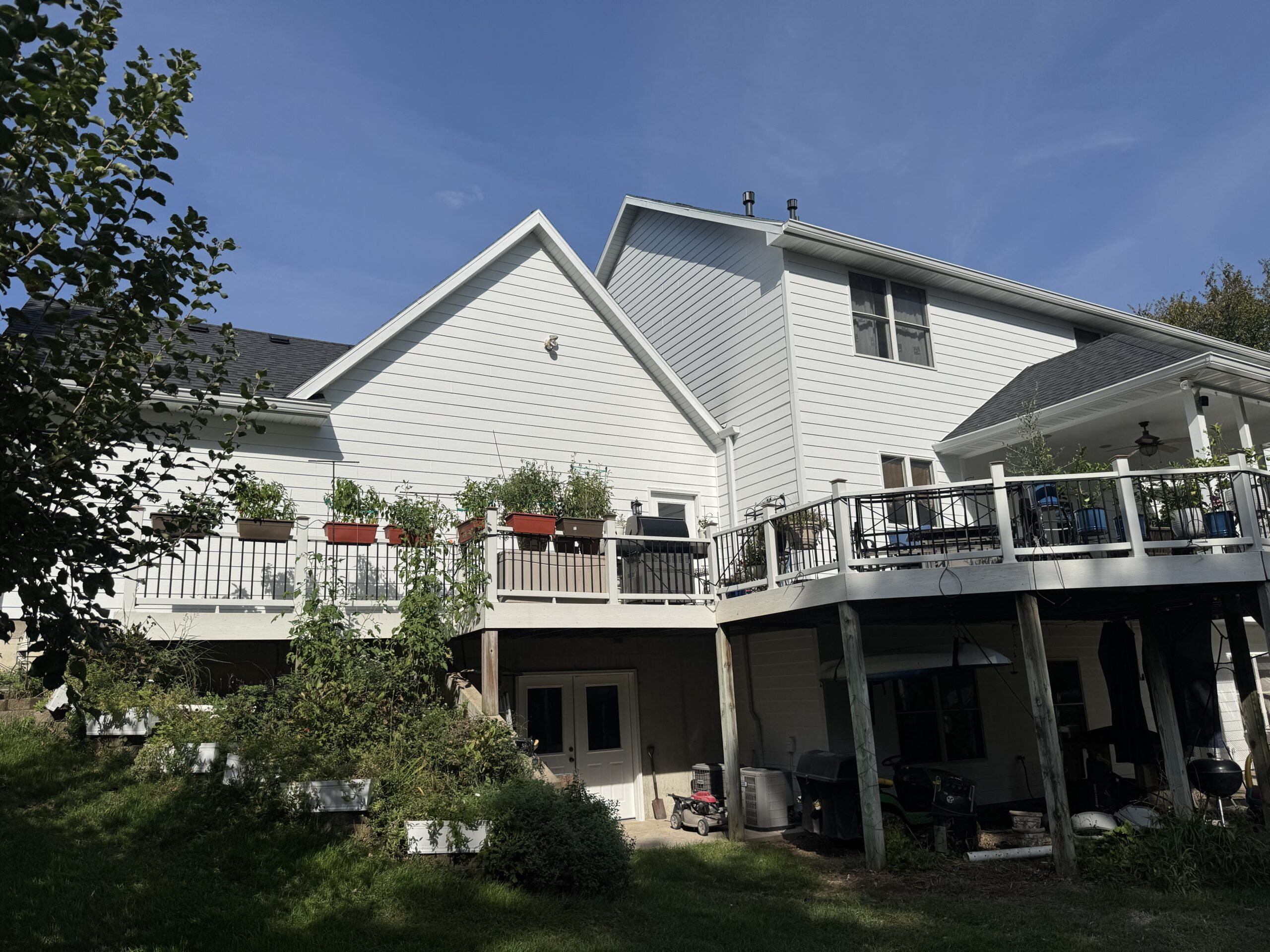
Height is a real cost factor. Painters working on 2-story homes, steep gables, or tall rooflines need ladders, scaffolding, or lift equipment to do the work safely. Setting up and repositioning that equipment across a full exterior project adds time that shows up in the final number.
Narrow side yards, fencing built close to the siding, and utility lines near the home’s exterior also slow crews down and push labor hours higher than an open, accessible property would. A painter who walks your property before quoting is accounting for all of this. One who quotes off photos or rough measurements may not be.
Mid-Missouri’s Climate and What It Adds to the Scope
This is a factor that homeowners in milder climates don’t deal with, but it matters here. Columbia and the surrounding area get real humidity in summer, freezing conditions in winter, and everything in between during spring and fall. That range accelerates paint failure on surfaces that weren’t properly prepped.
Exterior paint also needs to be applied within a specific temperature window, typically 50°F to 90°F, to cure correctly. That limits the working season and affects scheduling. Painters who work in mid-Missouri regularly factor these conditions into both their prep approach and their project timelines.
Things You Can Handle before Getting Estimates
A few decisions made early can keep project costs from running higher than they need to. None of these are about cutting corners. They’re about going into the process prepared.
- Address damage before calling anyone. Rot, cracked caulk, and peeling that gets worse while you wait adds to prep cost directly.
- Know your color direction. Large color shifts require more coats. The earlier you decide, the more accurately painters can quote.
- Tell painters about known problem areas. Moisture history, past paint failures, and shaded sides that collect mildew should all be mentioned upfront.
- Book in the right window. Late spring through early fall gives painters the conditions they need to do the work right.
Primer is also worth understanding before your project gets underway. Our post on what paint primer does for lasting results explains why that first layer has such a big effect on how long an exterior finish holds, and why skipping it is one of the most common reasons paint fails ahead of schedule.
Reading an Estimate the Right Way
HomeAdvisor’s exterior painting cost research puts the national average for painting a single-story home exterior between $1,800 and $4,400. That range shifts based on surface condition, paint quality, and prep scope.
A quote that comes in $1,500 under the competition might look like the smart pick. But if it’s based on 1 coat, skips primer, and uses a budget-grade product, you’re likely looking at a repaint in 3-4 years instead of 8-10. The savings don’t hold when you run the full math.
When comparing quotes, ask each painter what prep is included, how many coats the price covers, and exactly which product line they’re using. Our exterior house painting services page outlines what a properly scoped project should include, so you know what to look for in that comparison.
For homeowners across the Columbia, MO area, it’s also worth reading about sustainable painting for healthier, longer-lasting homes if material quality and long-term performance are part of your decision.
Call us at 573-533-4462 for a FREE estimate today. The painters at Garrett Painting will walk your property, go through every cost factor specific to your home, and give you a clear, honest number with nothing hidden.